

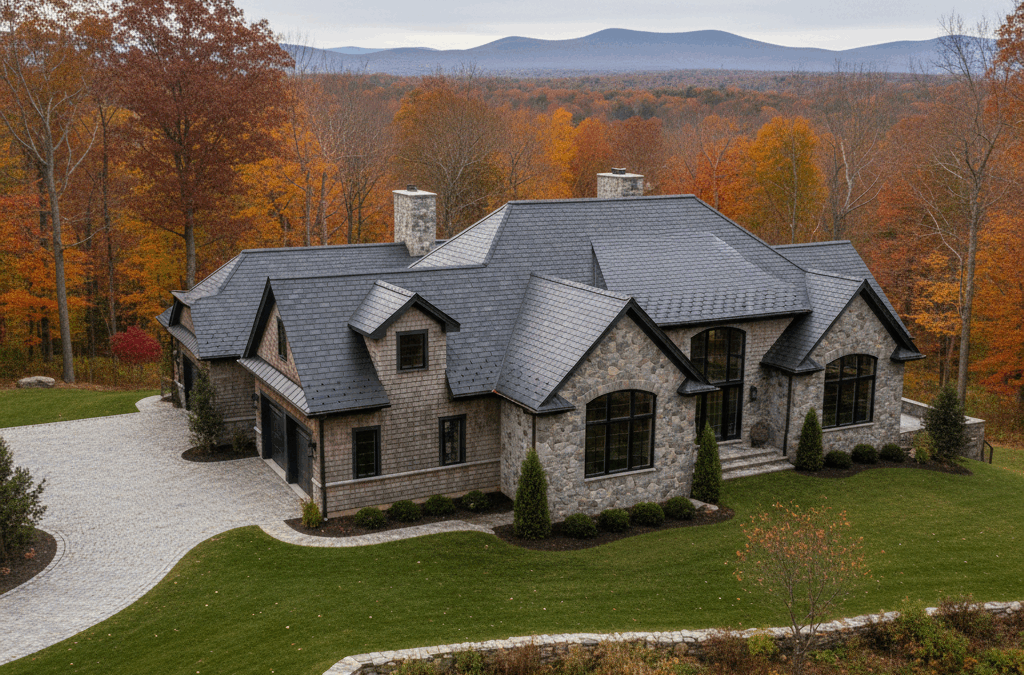
When you picture a high-end, “forever” roof, you probably think of the classic look of natural slate or clay. For centuries, these materials were the only choice for a home built to last. They look beautiful and can last a long time. But they also come with a long list of problems that homeowners of the past just had to accept.
Today, you do not have to accept them.
Modern material science has created a new category of roofing that offers the same stunning look without any of the old-world headaches. Synthetic roof tiles are engineered to solve every major problem of their traditional counterparts. This guide breaks down the synthetic slate roofing pros and cons, compares the materials, and shows why this technology is the future of roofing.
The Heavy Truth About Traditional Roofing
Natural slate and clay tiles have a romantic appeal, but the reality of owning them is often less than ideal. Their problems are inherent to the materials themselves.
- Extreme Weight: Natural slate is incredibly heavy. A single square (100 square feet) can weigh between 800 and 1,500 pounds. Most homes are not built to handle that kind of load. This means you must often pay for a structural engineer and costly truss reinforcements before installation can even begin.
- High Cost: These materials are expensive to quarry (slate) or manufacture (clay), and they are expensive to ship due to their weight. The price tag for the materials alone is often a budget-breaker.
- Difficult & Costly Installation: Because of the weight, installation is a slow, specialized, and dangerous job that requires a highly skilled (and expensive) crew.
- Shocking Brittleness: This is the biggest problem. Despite their weight, natural slate and clay are extremely brittle. They can easily crack from a stray hailstone, a falling branch, or even just being walked on incorrectly during a routine gutter cleaning. Replacing a single cracked tile is a delicate and expensive operation.
What Are Synthetic Roof Tiles?
Synthetic roof tiles are the solution to all these problems. They are a high-tech product, also known as composite roof tiles, made from a blend of advanced polymers, recycled materials, and UV inhibitors. They are engineered from the ground up to mimic the exact look and texture of natural materials while adding superior strength.
These are not the asphalt shingles you are used to. They are thick, high-definition tiles molded from 3D images of real quarried slate and handcrafted clay. The result is a look that is often indistinguishable from the “real” thing, right down to the color variations and rough-cut edges.
Synthetic Slate Roofing Pros and Cons
Like any product, composite tiles have a unique set of benefits and trade-offs. For most homeowners, the pros overwhelmingly outweigh the cons.
Pro: Incredible Durability
The durability of synthetic roofing is its greatest strength. Because they are made from polymer composites, they are not brittle. You can walk on them. They also have top-tier ratings for:
- Impact: Most synthetic tiles have a Class 4 impact rating. This is the highest level, meaning they can withstand the impact of a 2-inch steel ball dropped from 20 feet. This makes them a top choice for hail-prone areas.
- Wind: These tiles are engineered to perform in extreme weather, with many carrying a 110-mph wind rating (or higher).
- Fire: Composite tiles have a Class A fire rating, the best available, offering superior protection for your home.
Pro: Lightweight and Easy to Install
A square of synthetic roof tiles typically weighs between 200 and 350 pounds. This is more than 75% lighter than natural slate. This light weight means:
- No need for expensive structural reinforcement.
- Installation is faster and safer.
- You can use a standard roofing crew, which lowers labor costs.
Pro: Lower Cost
While a non-solar synthetic roof is a premium product (costing more than asphalt), it is significantly less expensive than natural slate or clay. When you factor in the material cost, the faster installation, and the lack of structural upgrades, the total project cost is dramatically lower.
[Internal Link Recommendation: Link the words “total project cost” to a solar savings calculator page at URL /resources/solar-savings-calculator]
Con: Higher Upfront Cost (vs. Asphalt)
The most common “con” is that a synthetic roof costs more than a standard asphalt shingle roof. This is true. You are paying for a luxury look and a 50+ year lifespan, so the initial investment is higher.
Con: Finding the Right Look
While the aesthetics are fantastic, they are still a manufactured product. A homeowner who wants the 100% unique, imperfect look of a quarried piece of stone might still prefer the natural option. However, modern manufacturing has made this difference almost impossible to spot from the curb.
The Big Secret: Synthetic Tech Is Solar Tech
Here is the most important takeaway: the same advanced technology that makes a non-solar synthetic roof so durable is the foundation for the next evolution of roofing.
Integrated solar roofs are a high-tech version of synthetic composite tiles.
Think about it. A solar tile needs to be a roof first. It has to be walkable, waterproof, and tough enough to withstand hail and wind for decades. It cannot be made of brittle clay or heavy slate.
Solar roof tiles, like those from Tesla or GAF, are made from advanced composite materials and tempered glass. They share the same DNA as the best non-solar synthetic tiles. They have the same Class 4 impact ratings, Class A fire ratings, and high wind ratings.
This means you are no longer choosing between “durable,” “beautiful,” and “functional.” You can have all three in one product.
Why a Synthetic Roof Is the Smart Choice
If you are already looking for a premium, long-lasting roof like synthetic slate, you are clearly a homeowner who values technology and long-term performance. You are making a 50-year decision.
Choosing a non-solar synthetic roof is a fantastic upgrade. You get a roof that is stronger, lighter, and more cost-effective than its traditional counterparts.
Choosing an integrated solar roof is the final step. You get all those same benefits, plus a roof that pays you back. It is the only roof that earns you money, increases your home’s value, and gives you energy independence.
Why settle for a roof that just sits there when you can have one that works for you?
The Future of Roofing Is Here
Natural slate and clay had a good run, but their time has passed. Their weight, cost, and fragility make them a poor choice for a modern home.
Synthetic roof tiles are the clear successor. They offer the exact same premium look while being lighter, stronger, and more affordable. And the best version of this modern technology is the one that comes with a built-in power plant.
Before you invest in a roof that only costs you money, see how a roof can make you money.
Ready to see how a durable, beautiful solar roof can work for your home? Contact our team today for a free consultation. We can create a custom design and show you the future of roofing.
